

CORE: FOAMS
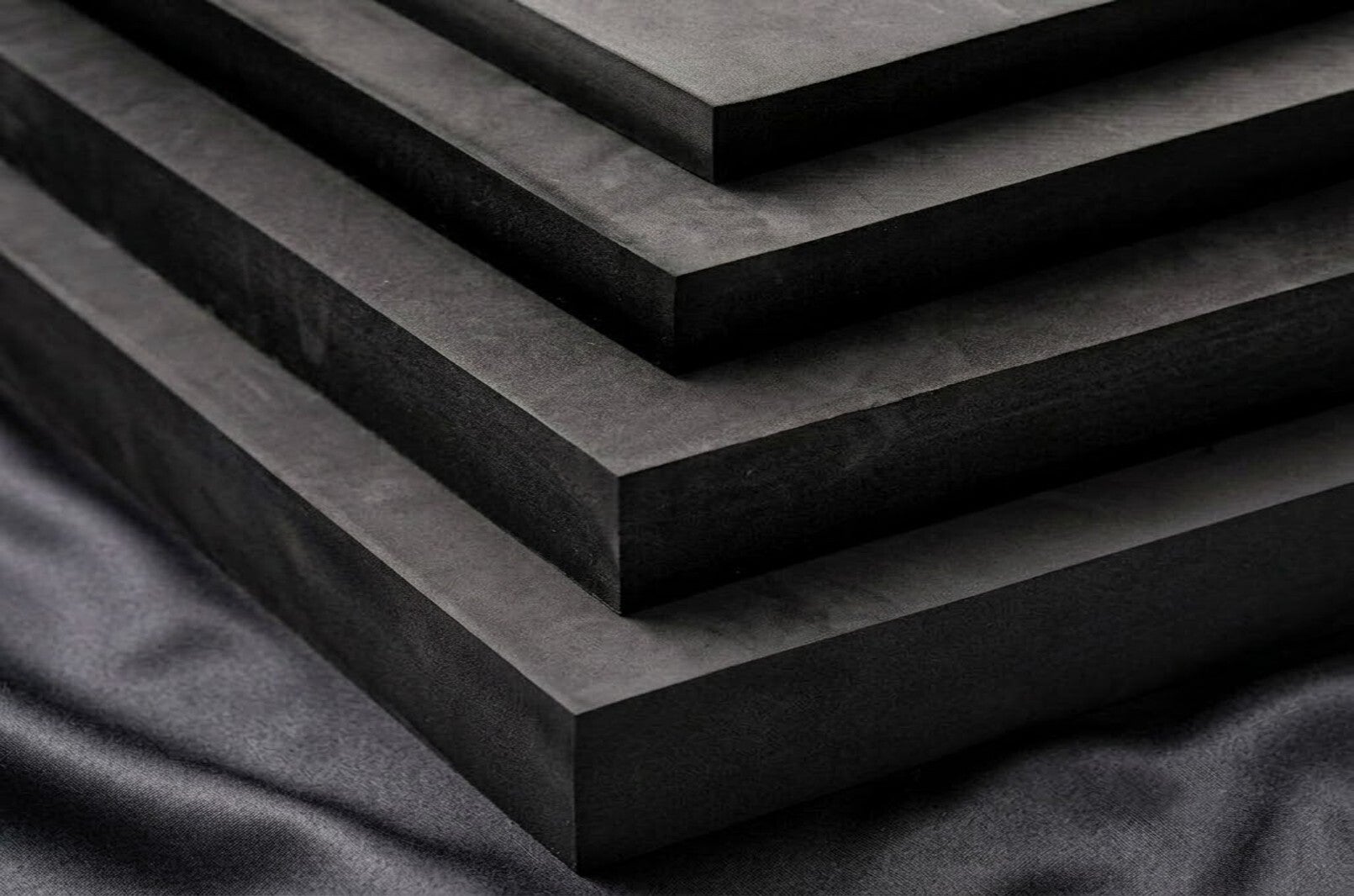
THE CORE OF A PADEL RACKET: EVA, FOAM AND DENSITIES
The foam forms the core between the faces of the racket and is one of the elements that most influences its feel and response.
Its density, composition and deformation capacity largely determine how the racket reacts during impact. In general terms, a higher density provides a firmer response, while a lower density allows greater deformation and a softer feel.
However, density should not be considered in isolation. The core works together with the fibres, structure and geometry of the racket.
EVA AND FOAM: UNDERSTANDING THE DIFFERENCE
EVA and FOAM are generic terms used to describe different types of materials used in padel racket cores. However, these names do not define a single standardised material.
EVA can be developed with different formulations and levels of hardness, producing very different behaviours depending on its composition.
FOAM, generally associated with polyethylene-based compositions, tends to offer a softer feel, greater deformation and easier ball output.
The important factor is therefore not simply whether a racket uses EVA or FOAM, but the specific formulation of the material and how it interacts with the rest of the racket's construction.
HYBRID CORES
Different layers, materials or densities can also be combined within the same core to obtain a more progressive response depending on the intensity of the impact.
The objective is not simply to create a “soft” or “hard” racket, but to achieve the desired overall behaviour.
WHAT ABOUT BLACK EVA?
The colour black does not, by itself, make EVA technically superior.
An EVA foam with the same density and composition does not necessarily behave differently simply because a black pigment has been added.
The important variables are its composition, density and response, rather than the commercial name or colour of the material.
DENSITY: WHAT IT REALLY MEANS
The density of a foam is expressed in kg/m³ and is one of the parameters used to define its behaviour. Configurations can range approximately from 15 kg/m³ in very soft cores to 50 kg/m³ in extremely firm cores.
In general terms, the lower the density, the greater the deformation capacity and the softer the feel; the higher the density, the lower the deformation and the firmer and more direct the response.
But a higher figure does not mean a better foam. Density must be selected according to the player, the desired behaviour and the complete construction of the racket.
At AUREA, we do not choose a density because of its number. We choose the density the project requires.
THERE IS NO PERFECT FOAM. THERE IS A SUITABLE CONFIGURATION.
The choice will depend on the player's physique, technical level, swing speed and playing style, but also on how the core interacts with the rest of the construction.
Core · fibres · structure · mould · balance · weight · surface
At AUREA, we do not select components because their name sounds more advanced. We combine them to achieve the behaviour we are looking for.
Customisation can change the appearance of a racket.
Product development defines what the racket is.